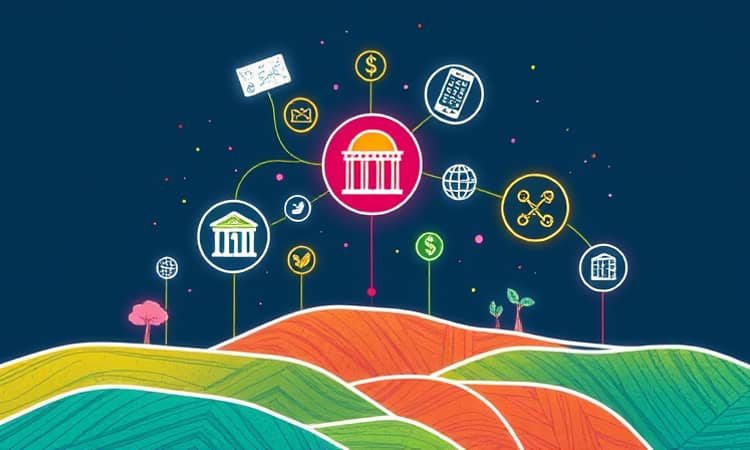
Imagine a world where your financial life flows seamlessly, accessible with a simple tap on your smartphone, tailored to your dreams and needs.
This is not a distant future; it's the reality being forged by open finance and digital banking, a revolution that redefines money management and leaves physical bank branches as relics of a bygone era.
As branch closures accelerate and digital adoption soars, embracing this shift is essential for thriving in a modern, interconnected economy.
For many, the routine visit to a bank branch has transformed from a necessity to an inconvenience, sparking a profound change in how we perceive financial security.
The digital wave offers unprecedented opportunities for control, transparency, and inclusion, reshaping lives and businesses alike.
What is Open Finance and Digital Banking?
Open finance extends the principles of open banking to a broader spectrum of financial data, creating a secure bridge for consent-based sharing via APIs.
It enables access to information from banks, insurers, investments, and pensions, fostering personalized services and innovation beyond mere transactions.
Digital banking, often called neobanks, operates without physical branches, leveraging mobile and online platforms with automation and AI.
This model cuts operating costs by 20-40% and aligns perfectly with the growing consumer demand for convenience and efficiency.
Together, these concepts represent a paradigm shift toward a more agile and user-centric financial ecosystem.
The Market in Numbers: A Digital Revolution Unfolding
The statistics reveal a landscape of rapid growth and widespread adoption, painting a clear picture of change.
Global digital banking net interest income is projected to reach $2.09 trillion by 2029, growing at a 6.80% compound annual growth rate.
With 1.75 billion digital accounts worldwide processing $1.4 trillion annually, the scale is staggering and transformative.
In the US, 76% of consumers use mobile banking apps, while branch closures average 1,646 per year since 2018, highlighting the irreversible trend.
This data underscores the digital transformation sweeping finance and the immense potential it holds for innovation and accessibility.
Empowering Consumers: Control, Transparency, and Inclusion
For consumers, the benefits are profound, offering tools for better financial health and independence.
- Holistic financial view through account aggregation, providing a single dashboard for all assets and liabilities.
- Personalized advice on budgeting, investing, and debt management becomes easily accessible.
- Simplified product comparison for loans and insurance fosters informed decision-making.
Open finance promotes inclusion by serving underserved populations with thin credit histories.
Alternative data access opens doors, while increased competition drives down fees, making finance more affordable.
Financial wellness is enhanced through automated investments and AI-driven fraud reduction, which could cut fraud by up to 50% by 2025.
This empowerment allows individuals to take charge of their futures with confidence and clarity.
Boosting Businesses and the Financial Ecosystem
Merchants and businesses gain significantly from faster account opening and tailored insurance pricing.
Broader financial profiles enable better risk assessment and customer retention strategies, driving growth.
- Faster onboarding processes reduce friction and improve customer acquisition.
- Custom pricing models based on verified data enhance profitability and competitiveness.
- Innovation flourishes as fintechs challenge traditional incumbents, spurring new product development.
For providers, the shift offers cost savings and opportunities for personalization, transforming how services are delivered.
This collaborative environment fosters a more dynamic and responsive financial landscape for all stakeholders.
Trends Shaping 2026 and Beyond
The drivers for 2026 center on digital-first behavior and technological advancements, setting the stage for further evolution.
- Digital shift driven by millennials and Gen Z, who prioritize mobile and online solutions.
- Convenience, low costs, and automation are key motivators for widespread adoption.
- AI and automation enhance efficiency, from personalization to fraud detection.
- Competition from fintechs and neobanks pushes traditional institutions to innovate relentlessly.
Open finance is expanding beyond banking to include investments and insurance, enabling smart data for tailored services.
Inspired by models like the UK's success, this expansion promises more holistic and integrated financial experiences.
Global Perspectives and Challenges
Globally, adoption varies, with China dominating revenue and the UK leading in open finance implementation.
In the US, there is a lag in open finance adoption despite high mobile usage, highlighting areas for growth.
- Cybersecurity and compliance remain top priorities as data sharing increases.
- Data silos and uneven AI readiness pose challenges for some institutions.
- Geopolitical risks and third-party vulnerabilities require vigilant management and robust safeguards.
Responsible adoption necessitates strong data protection and API security measures to build trust.
Overcoming these hurdles is essential for realizing the full potential of this digital transformation.
Looking Ahead: The Future of Finance
The future shines with opportunities for interoperable ecosystems and real-time financial services.
By 2026, the focus will be on cybersecurity, AI transformation, and expanding beyond payments to comprehensive information sharing.
- Investing tools integrated into banking apps will become standard, democratizing wealth management.
- Digital sales channels will boost revenue and enhance customer engagement through personalized interactions.
- Human-centric banking will blend technology with empathetic touchpoints, creating a balanced experience.
Embracing this change unlocks a future of financial empowerment where innovation and inclusion go hand in hand.
As we move forward, the journey beyond bank branches is not just about technology; it's about building a more connected and equitable world.
Let this evolution inspire you to explore new possibilities and take control of your financial destiny with confidence and hope.