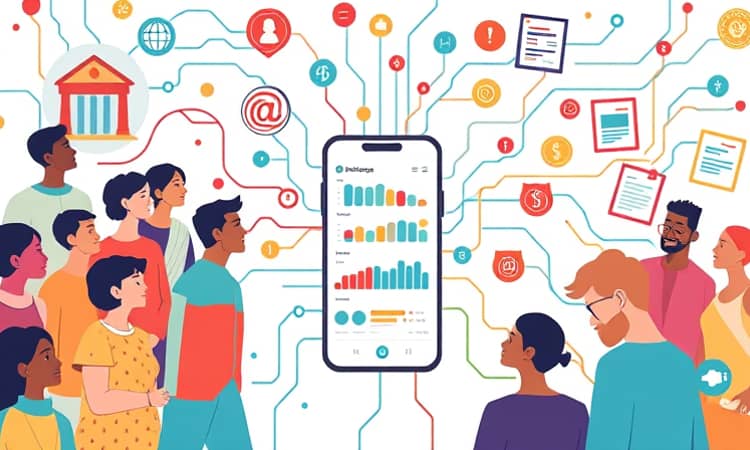
Imagine a world where your financial life is not fragmented across banks, insurers, and investment platforms, but seamlessly integrated at your fingertips.
This vision is becoming a reality with open finance, a transformative approach that extends beyond traditional banking.
By allowing secure data sharing across pensions, loans, insurance, and more, it empowers you with unprecedented control over your financial destiny.
It acts as a secure bridge between institutions, ensuring instant access only with your permission.
Unlike open banking, which is limited to accounts and transactions, open finance integrates broader data for personalized services.
This evolution promises to enhance financial literacy and inclusion for all.
What Is Open Finance and How It Differs from Open Banking
Open finance builds on the foundations of open banking by expanding data sharing to include a wider range of financial services.
It enables consumers to share their data across sectors like healthcare and investments via APIs.
This creates a comprehensive financial view that was previously unattainable.
The key differences between open banking and open finance are highlighted in the table below.
This broader scope means you can manage all aspects of your finances in one place.
It fosters innovation by allowing new players to enter the market with tailored solutions.
The Regulatory Framework Driving Open Finance
Regulations like the EU's FiDA are setting the stage for widespread adoption of open finance.
Final drafts are expected in 2025 with a phased rollout to ensure smooth implementation.
In the UK, the FCA envisions extending open finance to credit and mortgages for greater consumer control.
These rules prioritize data protection and privacy while promoting healthy competition.
Globally, countries like Brazil are leading with open finance initiatives that aid in offering lower-interest loans.
However, the U.S. lags due to ongoing debates over data security needs.
Stricter regulations will mature to balance innovation with consumer safety.
The Technology Behind Open Finance: APIs and Security
APIs enable standardized and secure data exchange between financial institutions.
They replace risky methods like screen scraping with direct, whitelisted connections.
Consumers can grant or revoke access at any time, ensuring transparency and portability.
This technical foundation supports real-time data sharing without credential exposure.
Platforms such as MX facilitate this by allowing consumer-authorized data sharing for better visibility.
Key technological benefits include:
- Instant data access with consent.
- Enhanced security through encrypted APIs.
- Interoperability across different financial systems.
- Reduced fraud risk by eliminating credential sharing.
- Improved user experiences with seamless integrations.
These advancements make financial management more efficient and trustworthy.
Empowering Consumers: Benefits of Open Finance
Open finance offers numerous advantages that directly enhance your financial wellness.
It provides a unified view of all accounts, helping you make informed decisions.
This leads to better management of spending, debt, and assets.
For underserved populations, it opens doors to credit and insurance previously out of reach.
The benefits are extensive and transformative.
- Holistic transparency: Aggregate data for a complete financial overview.
- Personalized services: Tailored budgeting, investments, and insurance pricing.
- Reduced costs: Competition drives down fees and offers transparent pricing.
- Innovation and choice: New entrants challenge incumbents, fostering superapps.
- Fraud mitigation: Real-time data sharing without exposing credentials.
Institutions also gain from accurate customer profiles and faster underwriting processes.
This symbiotic relationship fosters loyalty through enhanced experiences.
Real-World Applications and Use Cases
Open finance is already making waves with practical applications that improve daily life.
From financial superapps to better lending options, its impact is profound.
These use cases demonstrate how connectivity translates into tangible benefits.
- Financial superapps: One interface for payments, credit, investments, and insurance.
- Better lending: Brazil uses richer data for lower interest rates and fewer hurdles.
- Account opening: Verified data speeds up registration processes.
- Tailored insurance and investments: Precise risk assessment from a full financial picture.
- Business applications: Improved risk assessment and customer acquisition.
- Merchant benefits: Smoother payments and faster credit approvals.
- Inclusion and competition: Serves diverse needs and boosts fintech ecosystems.
These examples highlight the versatility and power of open finance in action.
Navigating Challenges: Security and Privacy in Open Finance
While open finance offers immense benefits, it also presents challenges that must be addressed.
Prioritizing consumer data protection is crucial to maintain trust and adoption.
Regulations and standards like FDX ensure secure data sharing without credential exposure.
Risks such as unauthorized access are mitigated through consent revocation mechanisms.
Transparency on data usage and fees is essential for consumer confidence.
Key security measures include:
- Moving from screen scraping to secure APIs.
- Implementing robust encryption and authentication protocols.
- Providing clear consent management tools for users.
- Ensuring global compliance with data protection laws.
- Fostering industry collaboration to address emerging threats.
By tackling these challenges head-on, open finance can thrive securely.
The Future of Finance: Market Outlook and Strategic Implications
The shift to open finance is accelerating innovation and growth across the financial sector.
By 2025-2026, we can expect a more accessible and secure ecosystem driving competition.
Consumers will achieve financial wellness through enhanced connectivity and control.
This ties into broader trends like smart data for holistic services.
Strategic implications for businesses and individuals are significant.
- Diversified ecosystems with new business models and collaborations.
- Increased consumer empowerment through data portability and interoperability.
- Enhanced financial inclusion for underserved communities globally.
- Continued regulatory evolution to support sustainable growth.
- Rise of integrated platforms that combine multiple financial services seamlessly.
Embracing open finance now can lead to a more equitable and innovative financial future.
Start exploring how you can leverage this connectivity for your own financial freedom.
The promise is clear: a world where your money works for you, not against you.