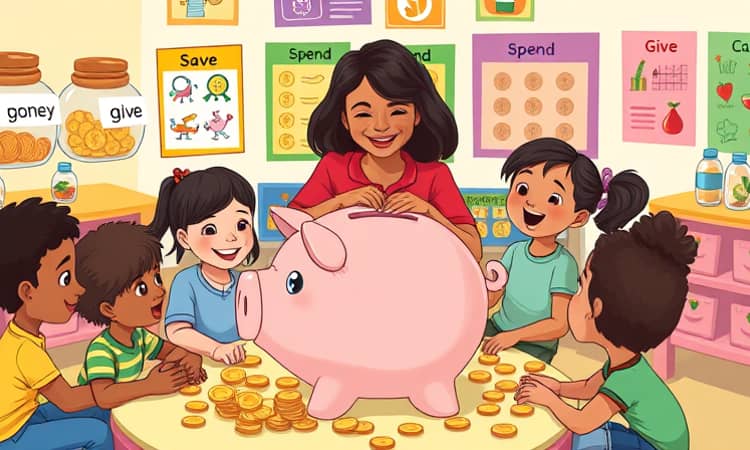
Equipping young people with money skills is one of the greatest gifts we can offer. Early financial education builds confidence, awareness, and resilience that lasts a lifetime.
Why Early Financial Literacy Matters
Children who receive structured financial education demonstrate significantly stronger outcomes as adults. They achieve financial confidence and autonomy, avoid high-cost credit traps, and maintain healthier relationships with money.
Research shows that students with at least three years of high school financial courses have credit scores about 25 points higher. They also experience a 40% lower delinquency rate on credit payments between ages 18 and 21, and exhibit reduce predatory loan use well into adulthood.
Parents benefit too. Households with educated teens report a 26% drop in loan default risk and 5% higher credit scores, reflecting the consistent money management habits passed between generations.
- Boosts budgeting, saving, and smart spending habits
- Encourages avoiding high-interest debt and payday loans
- Promotes early investment awareness and compounding benefits
- Fosters open family discussions about money choices
Core Topics by Age Group
Designing an age-appropriate curriculum ensures that lessons remain engaging and relevant. The following table outlines key concepts at each developmental stage.
Practical Teaching Activities and Methods
Applying concepts through play and real tasks cements understanding. Use hands-on real-world financial experiences that motivate and educate simultaneously.
- Games and Simulations: Monopoly, digital money-management apps, pretend stores
- Lemonade Stands and Mini-Businesses: Track costs, revenues, profits, and reinvestment
- Allowance with Chores: Tie earnings to tasks, encourage goal setting and saving matches
- Family Budget Exercises: Plan a vacation or grocery trip, compare prices, and discuss trade-offs
By incorporating engaging and interactive activities, children gain practical insights rather than rote rules. Celebrating small milestones, such as reaching a savings goal, deepens motivation.
Engaging Parents and Educators
Parental modeling is critical. When caregivers share their decision-making process—comparing interest rates, setting budgets, choosing between needs and wants—they create vital teaching moments.
Educators can reinforce lessons with newsletters, at-home assignments, and events that invite families to learn together. Establishing a community of learners across classrooms and dinner tables nurtures building long-term financial resilience.
Consistency is key: integrating money talks into everyday life—during grocery shopping, school fundraising, or birthday gift planning—turns abstract ideas into real choices.
State of Financial Education Today
As of mid-2025, 29 states mandate high school financial literacy for graduation, a dramatic rise from just 7 states in 2015. Projections indicate that by 2031, nearly 75% of public high school students will benefit from top-graded curricula.
Florida’s recent law requires a half-credit course starting in 2023–24, and many states celebrate April as Financial Literacy Month. Yet gaps remain, particularly in elementary and middle school levels, underscoring the need for cohesive K–12 strategies.
The Consumer Financial Protection Bureau recommends starting basic money conversations in kindergarten and weaving lessons steadily through every grade. This approach yields the most robust outcomes in lifelong financial well-being.
Overcoming Common Challenges
Introducing financial topics can meet resistance. Parents may feel unprepared, educators may lack resources, and children might see math and money as intimidating.
To address these barriers:
- Provide simple tools: pocket money trackers, colorful jars, and interactive apps
- Offer training: workshops for teachers and family sessions that build confidence
- Use incremental rewards: celebrate small wins, encourage curiosity over perfection
Embedding lessons into routine moments—car rides, meal prep, and breaks—makes learning seamless and sustainable.
Conclusion
Building a foundation of money skills equips children to navigate future challenges with poise and purpose. Through thoughtful curricula, purposeful activities, and collaborative support from families and schools, we can shape a generation that manages resources wisely and embraces opportunity with confidence.
By prioritizing early financial education, we are not only fostering capable individuals but also nurturing healthier communities and a more stable society. Let’s commit today to empowering our kids with the knowledge they need for a brighter tomorrow.