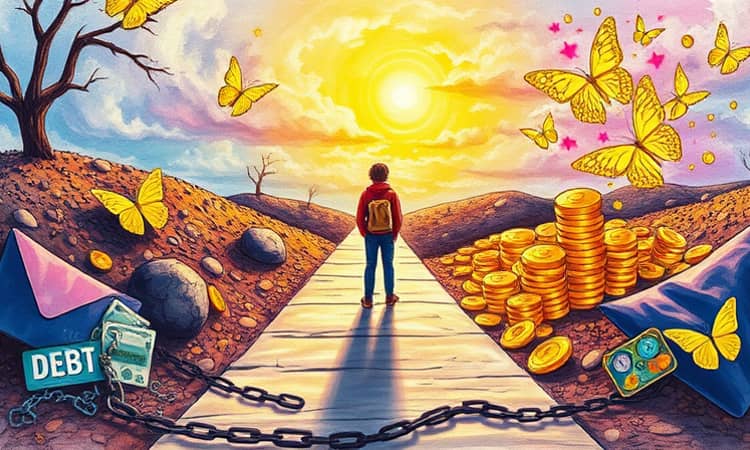
Imagine waking up each day burdened by the weight of $1.18 trillion in credit card debt, a staggering projection for 2026 that reflects our collective financial struggle.
This figure isn't just a number; it's a signal of the deep-seated economic pressures and personal challenges millions face in today's uncertain world.
Yet, amid this deluge, there is hope, resilience, and a path to transform your relationship with money.
We live in an era where consumer debt has skyrocketed, fueled by inflation, rising costs, and the temptations of easy credit.
From holiday spending sprees to essential purchases on credit, the cycle of debt can feel inescapable, leaving many in a state of financial anxiety.
But what if you could shift your perspective, turning this burden into an opportunity for growth and freedom?
This article explores how restructuring your money mind can lead from debt to delight, offering practical insights and inspiration based on real data.
The Debt Deluge: Understanding the Scale
The current debt landscape is daunting, with both consumer and federal levels reaching new heights.
By 2026, credit card balances are projected to hit $1.18 trillion, marking the smallest year-over-year growth in over a decade, yet still a heavy load.
Delinquency rates, while stable in some areas, show slight increases in others, reflecting ongoing economic strains.
Federal debt adds to this picture, with total debt at $36.2 trillion in early 2025 and projections suggesting it could soar to $55 trillion in the next decade.
This table highlights key consumer credit forecasts for 2026, providing a clear view of the challenges ahead:
Beyond these numbers, holiday debt concerns are real, with 59% of consumers somewhat or very concerned about their debt levels post-holidays.
This highlights how seasonal spending can exacerbate financial stress, especially for younger generations like Gen Z and Millennials.
They often use credit for essentials, revealing a troubling trend of necessity-driven borrowing that strains budgets further.
Signs of Resilience: Finding Hope in the Data
Despite the overwhelming debt, there are glimmers of resilience and responsible management emerging.
Consumer credit behavior shows signs of moderation, with credit card growth slowing from double-digit increases in previous years.
This suggests that people are becoming more cautious with spending, even amidst economic uncertainty.
Stable delinquency rates, as noted by experts, indicate that many are managing their finances reasonably well.
Jason Laky, EVP Financial Services at TransUnion, emphasizes this point, stating that the smallest growth in balances combined with stable rates underscores consumer strength.
Michele Raneri, VP U.S. Research, adds that slight delinquency increases don't overshadow the overall reasonable management.
Positive consumer sentiment is also on the rise, with indices showing improvements in debt outlook, savings, and income.
Key resilience signals include:
- Moderating credit card growth due to measured spending.
- Lender caution leading to more disciplined borrowing.
- Stable delinquencies in structured finance markets.
- Consumer health indices ticking upward in recent months.
These trends offer a beacon of hope, showing that small steps can lead to significant financial stability.
They remind us that even in tough times, proactive financial habits can make a difference, fostering a sense of control and optimism.
Economic Headwinds: Navigating the Broader Context
The economic backdrop adds complexity to the debt situation, with factors like inflation and unemployment shaping outcomes.
Inflation is projected at 2.45% by late 2026, while unemployment may reach 4.5%, creating a challenging environment for debt management.
Federal debt dynamics, such as $10 trillion maturing in 2026, introduce refinancing risks that could impact the broader economy.
High debt levels might lower real GDP growth by 0.25% to 0.5% annually, raising inflation risks and suppressing earnings growth.
This underscores the importance of understanding macroeconomic pressures.
Key economic factors to watch include:
- Federal rate cuts expected to ease borrowing costs.
- Debt-to-GDP ratios rising to potentially 124% by 2035.
- Net interest costs surpassing defense spending as a share of GDP.
- Policy impacts from bills like OBBBA adding to deficits.
These headwinds demand a savvy approach to personal finance, where awareness of external factors can guide better decisions.
By staying informed, you can anticipate changes and adapt your strategies accordingly, turning challenges into opportunities for growth.
Restructuring Your Mindset: Practical Steps to Delight
Transitioning from debt burden to financial delight requires a fundamental shift in how you think about money.
It starts with acknowledging the current reality, then embracing a proactive mindset focused on responsibility and moderation.
Inferring from the data, prioritize measured spending over impulsive purchases, and use lender discipline as a model for your own habits.
This means setting clear budgets, tracking expenses, and avoiding unnecessary credit use.
To restructure your money mind, consider these actionable steps:
- Review your debt regularly to stay aware of balances and interest rates.
- Create a repayment plan that targets high-interest debts first.
- Build an emergency fund to reduce reliance on credit for essentials.
- Practice mindful spending by questioning every purchase's necessity.
- Seek financial education through resources or advisors to enhance skills.
Incorporating small changes, like reducing discretionary spending or using cash instead of cards, can lead to significant savings over time.
Remember, the goal is not just to eliminate debt but to cultivate a joyful relationship with money.
Celebrate milestones, such as paying off a credit card or increasing savings, to reinforce positive behavior.
This journey is about transforming financial stress into empowerment and freedom, where every step forward brings more delight.
2026 Outlook: Embracing Opportunities Ahead
Looking ahead, 2026 presents both risks and opportunities for financial health.
Forecasts indicate slight increases in delinquency rates across some credit products, but overall, consumers are expected to manage reasonably well.
Opportunities arise from potential Fed rate cuts, which could lower borrowing costs and ease debt burdens.
Economic factors like stable inflation and moderate unemployment growth provide a backdrop for prudent financial strategies.
To thrive in this environment, focus on resilience-building practices:
- Diversify income streams to buffer against economic shocks.
- Invest in low-risk assets to grow wealth steadily.
- Monitor credit reports for accuracy and improvement opportunities.
- Engage in community support networks for shared financial wisdom.
- Stay adaptable to policy changes that may affect personal finance.
The key is to view 2026 not as a year of fear but as a chance to solidify your financial foundation.
By adopting a forward-looking mindset, you can turn projections into actionable plans, ensuring that delight becomes a lasting reality.
This outlook encourages a proactive approach to future uncertainties, where preparation meets optimism.
As you embark on this path, remember that every small effort counts towards a brighter financial future.