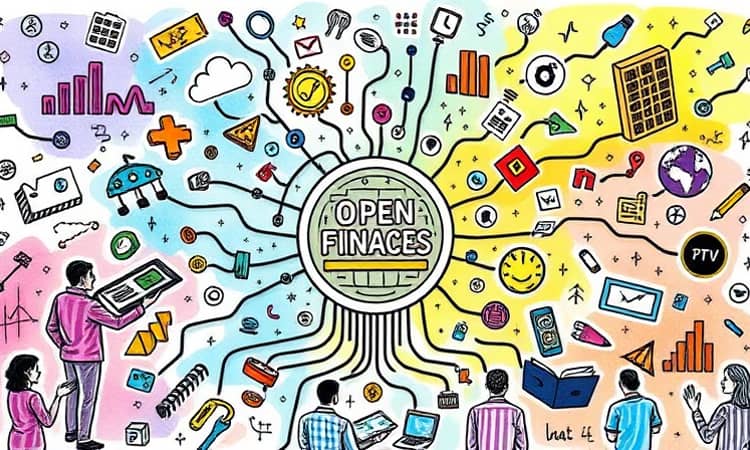
In today’s digital era, financial data is at the heart of innovation and consumer empowerment. Yet too often this data is trapped in silos, guarded by individual institutions that limit its potential. Open Finance offers a transformative vision: a federated ecosystem where data flows securely, consumers gain control, and businesses unlock unprecedented insights. This article explores the journey from fragmentation to federation, highlighting the key benefits, market impacts, and critical success factors that will shape the future of finance.
The Problem: Financial Fragmentation
Financial fragmentation arises when customer data is scattered across multiple banks, insurers, and fintech platforms without cohesive integration. This leads to information asymmetries that hinder effective service and creates barriers to innovation. Incumbent banks often hold the majority of data, putting smaller players at a competitive disadvantage. Consumers bear the burden too, juggling disparate apps and passwords to piece together their financial picture.
- Partial customer views limit personalized offerings.
- High operational costs from bespoke data integrations.
- Consumers forced to manage multiple platforms.
Such fragmentation also sustains legacy partnership models that are costly and inflexible. Financial institutions may resort to screen scraping or manual processes, exposing consumers to security risks and hampering trust. The very systems designed to protect data can end up stifling innovation and excluding underserved groups.
Historically, bilateral partnerships between banks and fintech firms required bespoke API integrations. These were time-intensive and costly, often taking months to implement. As a result, innovation was gradual and concentrated among well-capitalized institutions. Smaller players struggled to negotiate access, perpetuating a cycle of exclusion and inefficiency. This environment stifled competition, keeping service fees high and limiting the range of financial tools available to everyday consumers.
The Federation Solution: Open Finance Benefits
Open Finance represents a holistic shift toward data collaboration by leveraging open APIs to connect disparate services. This federation model empowers third-party providers, fintechs, and traditional institutions to access data with explicit consumer consent, driving a new era of tailored financial experiences.
- Account aggregation for seamless money experience across accounts.
- Personalized budgeting, saving, and investment recommendations.
- Enhanced financial inclusion for gig workers and emerging markets.
- Greater transparency and data control for consumers.
From a consumer standpoint, open finance unlocks powerful financial management tools that were once the purview of high-net-worth individuals. Whether it’s automated savings plans triggered by spending patterns or instant credit decisions based on alternative data, these innovations are becoming mainstream. By leveraging real-time transaction analytics, providers can anticipate needs, such as offering microloans before a bill is due, reducing late fees and boosting financial resilience.
Beyond banking, open finance extends into insurance, investments, and retirement planning. Aggregated data can reveal risks and opportunities across a consumer’s entire financial portfolio, enabling holistic advice. For instance, insurers can tailor premiums using real-time health or driving behavior data, while advisors can rebalance investment portfolios in response to shifts in income or spending habits.
Companies harnessing this federated model can develop products that adapt to individual financial behaviors. On the business side, open finance streamlines key processes like KYC, fraud detection, and credit scoring. By shifting to standardized APIs, institutions reduce the need for bilateral partnerships, significantly cutting integration costs and accelerating time to market.
- Automated client onboarding and risk assessment.
- Transparent pricing models and lower fees across services.
- Opportunities for new revenue streams and business models.
- Real-time data insights for informed decision-making.
Market-Level Transformation
At a macro level, federation stimulates competition and innovation, driving both market growth and consumer benefits. Rather than splitting existing market share, the introduction of new players and services expands the overall ecosystem. Consumers enjoy increased choice and tailored solutions, while providers collaborate to build richer, interoperable platforms.
Early adopters in regions with progressive regulation, such as the UK and parts of Asia, have already witnessed vibrant fintech ecosystems. Open finance initiatives have led to the emergence of digital-only banks, robo-advisors, and AI-driven wealth management platforms. These services cater to diverse demographics, proving that when barriers to data flow are lowered, innovation accelerates and consumer welfare improves.
Critical Success Factors and Prerequisites
To realize the promise of federation, certain prerequisites must be in place. A robust data protection framework underpins consumer trust, with clear consent mechanisms and strong encryption standards. Effective authentication protocols and transparent privacy policies ensure that data is shared responsibly and securely.
Financial infrastructure must support instant settlement and interoperability. Rich transactional data enables advanced analytics, powering personalized services and inclusive credit decisions. Governance also plays a pivotal role; regulators, institutions, and fintechs must align on common standards, fostering a cooperative environment rather than unilateral action.
Collaboration between regulators and industry players is essential. Regulatory sandboxes can provide controlled environments to test new models without exposing consumers to undue risk. Furthermore, open-source standards for APIs and data formats help ensure compatibility across borders, paving the way for a truly global open finance network. Education and literacy programs also play a key role in helping consumers understand their rights and opportunities in this new ecosystem.
Challenges and Implementation Barriers
Despite its promise, open finance faces significant hurdles. Large incumbent banks with legacy IT systems may resist participation due to upgrade costs and fear of disintermediation. Misaligned incentives can slow adoption, as smaller players and new entrants navigate complex regulatory landscapes while established institutions seek to protect existing revenue streams.
Sector disruption is inevitable: intermediaries may lose ground, and traditional business models will be challenged. Yet this creative destruction is essential for long-term progress. Overcoming these barriers requires balanced incentives, clear regulatory guidance, and collaborative industry governance designed to share risks and rewards equitably.
Data quality and standardization present another significant challenge. Inconsistent data schemas and varying API specifications can lead to integration issues and misinterpretation of critical financial information. Industry consortia and standards bodies must work together to define common protocols, ensuring that data shared across entities retains its integrity and relevance. Without this alignment, the promise of a federated ecosystem may be undermined by fragmentation at the technical level.
Conclusion: Embracing the Federation
The journey from financial fragmentation to a federated open finance ecosystem is both complex and exhilarating. It promises a future where consumers wield their data as a source of empowerment, businesses operate with greater efficiency, and markets thrive through continuous innovation. By addressing critical success factors—data protection, interoperability, and governance—and overcoming entrenched barriers, we can unlock a truly inclusive financial landscape.
The road ahead will require relentless focus on inclusivity, ensuring that open finance frameworks are accessible to underrepresented communities. By promoting open-source tools and community-driven initiatives, stakeholders can democratize financial innovation. Ultimately, the federated open finance model is not just a technological shift; it’s a paradigm change in how we view money, data, and collaboration.