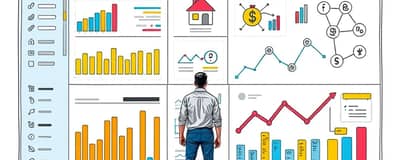
In an era of rapid technological change and evolving regulations, mastering financial data is no longer optional—it is a strategic imperative. Organizations that achieve true transparency and control over their data gain a competitive edge, build investor trust, and prepare for an increasingly complex regulatory landscape.
Redefining Full Disclosure and Data Mastery
At its core, financial data encompasses transactional records—accounts payable, accounts receivable, payroll, inventory, and revenue—as well as general ledgers, trial balances, subledgers, budgets, forecasts, key performance indicators (KPIs), and external reporting like financial statements and investor disclosures.
Traditional full disclosure principles under GAAP—accuracy, completeness, objectivity, materiality, and fair presentation—remain foundational. Yet modern expectations extend far beyond published statements. Stakeholders now demand granular, segment-level, machine-readable disclosures that are traceable and auditable at every level.
Today’s definition of data mastery involves the ability to deliver data transparency, auditability, and explainability across all financial processes. This means not only assembling consolidated reports but ensuring each figure can be traced back to its source, validated, and explained to regulators, auditors, or internal decision makers.
Moreover, finance teams must embrace real-time insight, machine-readable tagging and drill-down capabilities, enabling dynamic analysis and compliance with emerging disclosure requirements. The shift from static PDFs to structured, tagged data transforms how organizations present and leverage their financial information.
Building a Robust Framework: Technology, Governance, and Processes
Mastery begins with a solid technical foundation. Integrated enterprise resource planning (ERP) systems, data warehouses, and data lakes store and unify disparate sources. Yet storage alone is not enough; organizations need:
• A comprehensive metadata management and lineage tracing capability to map data origins, transformations, and destinations.
• Automated data quality pipelines that identify anomalies, reconcile discrepancies, and enforce validation rules at every stage.
• Robust role-based access controls and clear data stewardship, assigning specific responsibilities to data approvers, data stewards, and subject-matter experts.
Equally critical are governance and process practices. A finance data governance council should oversee policy development, ensuring standards for data definitions, usage, and retention. Standard operating procedures (SOPs) guide data handling, reconciliation routines, and exception management.
To drive consistency and reliability, organizations can adopt the seven standards of reliable financial data:
- Accurate and free from error
- Collected on time
- Complete and comprehensive
- Consistent across systems
- Current and relevant
- Extracted from credible sources
- Standardized format
Embedding these standards into daily workflows—through automated checks and periodic reviews—ensures data remains trustworthy and fit for strategic decision making.
The Regulatory Landscape Driving Transparency
Regulators worldwide are mandating deeper disclosure and machine-readable formats. Public companies must prepare for enhanced segment reporting and disaggregated expense disclosures under new FASB standards. At the same time, the Financial Data Transparency Act (FDTA) pushes federal agencies to adopt common data standards by 2027.
Beyond corporate reporting, consumer-facing institutions must navigate personal financial data rights under the CFPB’s Personal Financial Data Rights Rule. State privacy laws now impose stringent requirements on sensitive data processing, consent, and transparency.
Additionally, algorithmic pricing rules—such as New York’s Algorithmic Pricing Disclosure Act—require businesses to disclose automated pricing systems, illustrating the broader trend toward explaining how data and algorithms shape financial outcomes.
Strategic Advantages: Speed, Trust, and Resilience
High-quality, well-governed data unlocks tangible benefits across the enterprise:
• Real-time or near-real-time reporting empowers finance teams to react swiftly to market shifts, update forecasts, and seize emerging opportunities.
• Continuous, AI-native monitoring capabilities deliver 100% transaction coverage, identify anomalies before they escalate, and support audit readiness.
• Robust backup and tested business continuity plans mitigate downtime and data loss, safeguarding both financial results and corporate reputation.
Ultimately, mastering financial data elevates finance from a historical recorder to a proactive strategic partner. Equipped with advanced analytics and scenario planning, CFOs can lead cross-functional initiatives, drive operational efficiency, and build investor confidence.
In a world of ever-tightening regulations and rising stakeholder expectations, full disclosure and data mastery are critical differentiators. By investing in integrated technology, disciplined governance, and rigorous processes, organizations position themselves for sustainable growth, reduced risk, and enhanced transparency.
The journey to full disclosure begins today. Finance leaders who embrace these principles will not only meet compliance requirements but also unlock new strategic horizons for their businesses.