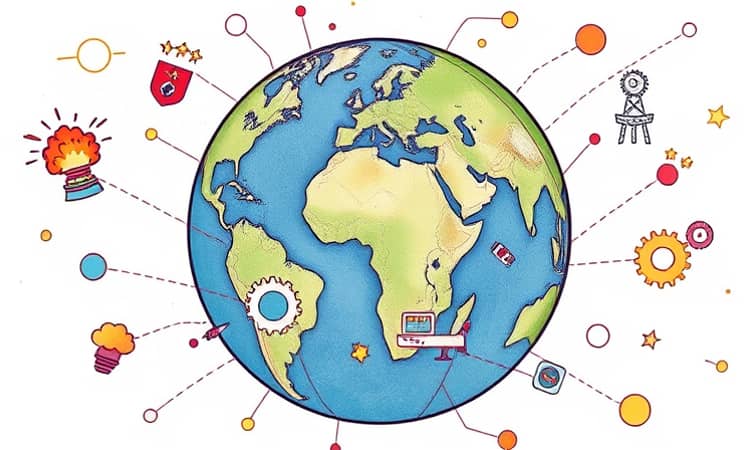
In 2026, the world stands at a pivotal juncture where geopolitical shocks threaten to unravel global stability.
Geopolitical shocks are reshaping our world with unprecedented force, from trade disruptions to armed conflicts.
This article provides a comprehensive guide to understanding and navigating these turbulent times with resilience and foresight.
The Landscape of Geopolitical Risks in 2026
Geopolitical shocks encompass sudden events that alter international relations and economic landscapes.
These include trade barriers, regional conflicts, and resource competitions that amplify volatility.
With unprecedented levels of volatility and risk, recognizing these threats is the first step toward adaptation.
Here are the major risks projected for the coming year.
- Geopolitical Instability and Trade Barriers: Tariffs and sanctions disrupt global trade flows, with US tariffs rising sixfold in 12 months.
- Armed Conflicts and Expansions: Approximately 60 ongoing wars worldwide, the highest since WWII, including in Ukraine and the Middle East.
- Supply Chain and Business Interruptions: Vulnerabilities from port congestion to digital domino effects in complex networks.
- Critical Minerals and Resource Weaponization: China controls 80% of rare earths mining, creating strategic dependencies.
- Nuclear Risks: US and Russia hold 87% of nuclear warheads, with potential escalation post-New START.
- Natural Disasters and Climate Extremes: Increasing frequency of events that cascade into economies and supply chains.
- AI and Tech Competition: Central to US-China rivalry, with spillovers affecting global regulations.
- Youth Protests and Unrest: Waves in countries like Nepal and Madagascar, leading to political shifts.
- North Korea Escalations: Nuclear advancements and military provocations adding to regional tensions.
These risks underscore how supply chain vulnerabilities amplify economic strain on a global scale.
Key Players and Their Strategic Moves
The actions of leading powers define the geopolitical arena and its impacts.
Understanding their priorities is crucial for anticipating market shifts and opportunities.
This table reveals how emerging powers maneuver for influence in an evolving world order.
Economic Ripples and Market Adaptations
Geopolitical shocks reverberate through economies, affecting everything from trade to investment flows.
Trade fragmentation requires adaptive responses as sectors realign to new realities.
Markets have shown resilience, but escalation risks could dampen chains and financial stability.
- Trade Fragmentation: Resilient but realigning, with risks in USMCA and sector-specific measures from India and Turkey.
- Investment Shifts: Companies reassess supply chains and FDI amid changing tariffs and immigration policies.
- Market Absorption: Economies adapt to shocks, but lower rates and moderate leverage cut systemic finance risks.
- Event Risks: From US Supreme Court decisions to midterm elections, adding layers of uncertainty.
Nuclear escalation poses existential threats that must be integrated into strategic planning.
Business Response Strategies for Building Resilience
To thrive amid uncertainty, businesses must adopt proactive and flexible approaches.
Resilient business strategies are essential for survival in this volatile environment.
Focus on security and resilience over mere scale and cost optimization.
- Diversify beyond single-region or just-in-time models to reduce vulnerabilities.
- Prioritize security in mission-critical sectors, even if it increases operational costs.
- Develop plans for protests and unrest to ensure employee safety in unstable regions.
- Adapt to patchwork rules, such as tariffs and digital regulations, with agile compliance.
- Leverage collaborations in strategic "clubs" for export controls and collective security.
- Monitor chokepoints like ports and rare earths for proactive risk management.
- Prepare for AI vulnerabilities and climate cascades that intersect with geopolitics.
Leverage collaborations in strategic clubs can enhance collective bargaining and innovation.
Practical Steps for Individuals and Organizations
Beyond corporate strategies, individuals and groups can take actionable steps to build resilience.
Monitor chokepoints for proactive planning to stay ahead of potential disruptions.
Engage in continuous learning and network-building to navigate complexities.
- Stay informed on global events through reliable sources like the BlackRock Geopolitical Risk Indicator.
- Build flexible supply chains that can pivot quickly in response to shocks.
- Invest in technologies that enhance data protection and cybersecurity measures.
- Engage in community resilience efforts to buffer against local economic impacts.
- Advocate for policies that promote stability and international cooperation.
Adapt to patchwork rules and regulations is key to maintaining competitive edges.
Key Data Points to Inform Decision-Making
Specific numbers provide clarity on the scale and urgency of geopolitical risks.
Use these data points to ground strategies in reality and anticipate trends.
- US tariffs have increased sixfold in the last 12 months, signaling protectionist shifts.
- China controls 80% of rare earths mining, highlighting resource dependencies.
- The US designs over 90% of advanced chips, a critical tech advantage.
- US and Russia hold 87% of nuclear warheads, with China aiming for 1,500 by 2035.
- Approximately 60 ongoing wars worldwide, the highest since WWII.
- The Global South drives 50% of global GDP growth by the 2030s.
- Europe's trade deals reach nearly 2 billion customers in emerging markets.
- US services exports account for 13% of cross-border commercial activity.
These figures illustrate how critical minerals dependencies create strategic chokepoints globally.
Conclusion: Thriving in a World of Shocks
Geopolitical shocks are inevitable in our interconnected world, but they need not lead to paralysis.
By understanding the landscape and implementing strategic adaptations and resilience, we can turn challenges into opportunities.
AI and tech competition defines new frontiers for innovation and collaboration.
Embrace change, build robust networks, and stay vigilant to not only survive but thrive in 2026 and beyond.
The future belongs to those who prepare, adapt, and foster cooperation in the face of uncertainty.