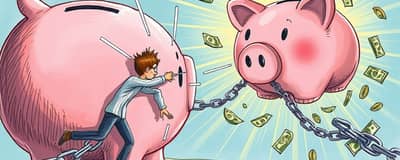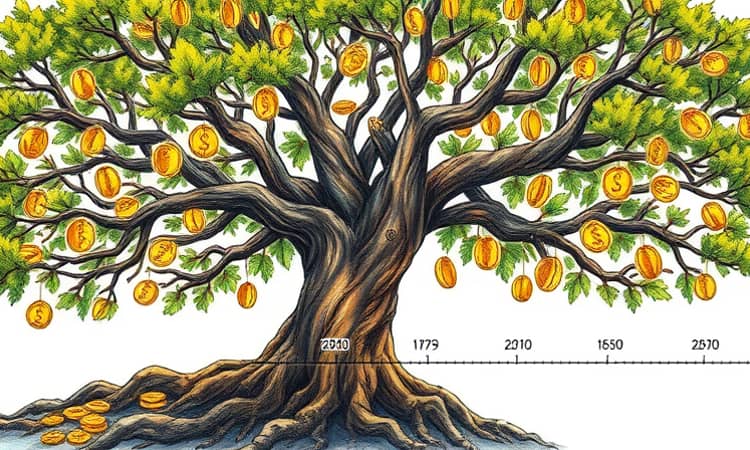
Investing is not a race to the finish line; it’s a journey measured in decades rather than days. By focusing on time in the market instead of timing the market, you position yourself to harness the exponential power of compound returns and weather inevitable downturns with confidence.
The Power of Compounding: A Snowball Effect
Few financial phenomena rival the dramatic impact of compounding. When you reinvest dividends and earnings, each dollar you make works for you, generating additional returns. Over a 30-year period, a $10,000 investment earning an average of 8% per year can swell to nearly $100,000 without any extra contributions.
Consider an investment tracking the S&P 500 from 1990 to 2024. That initial $10,000 grows to more than $339,000, illustrating how consistent, modest returns can transform your capital into significant wealth. In the first year, a 10% return adds $1,000 in gains; by year 25, that same 10% return generates over $10,000, magnifying your earnings with each passing year.
Key Benefits of Patient Investing
Long-term investors reap rewards that go beyond mere dollars and cents. Embracing a multi-decade horizon can boost your financial and emotional well-being.
- Reinvested profits create a snowball that accelerates wealth accumulation over time.
- Steady approach reduces emotional stress by eliminating daily market noise and panic selling.
- Lower transaction costs and taxes from fewer trades improve net returns.
- Alignment with economic growth ensures you benefit from innovation and productivity gains.
- Historical data favors buy-and-hold over frequent trading strategies.
Understanding Market Volatility and Staying Invested
Volatility is not a flaw in the system—it’s the engine of market returns. Sharp declines of 10%, 15%, or more occur regularly, but over extended periods, these extremes tend to smooth out. From 1937 to 2024, the S&P 500 delivered an average annual return of 10.7%, with positive years 76% of the time.
Missing the market’s best days can be disastrous. Between 2004 and 2023, staying fully invested yielded a 9.8% average annual return. Skip just the ten best trading days and your annual return plunges to 5.6%. Missing twenty of those crucial days slashes returns to 2.3%. This stark contrast underscores the danger of market timing and the value of enduring through volatility.
Volatility compresses over longer horizons, turning extreme swings into steady growth. During the 2008–2009 financial crisis, the S&P 500 lost over 50%. By March 2013, it had not only recovered but reached new highs, demonstrating that downturns can become stepping stones to greater gains.
Real-World Success Stories
Apple’s trajectory is a testament to the merits of holding quality assets through market cycles. Acquired around 2010 at roughly $3 per share (split-adjusted), Apple soared to over $180 by 2025, excluding dividends. Investors who remained patient witnessed the fruits of innovation and consistent earnings growth, without succumbing to the urge to trade on each news headline.
Even those who purchased shares at market peaks and endured crashes often found themselves ahead if they resisted panic selling. The true peril lies not in buying at high prices but in selling in fear, cutting short the recovery and missing critical rebounds that drive long-term performance.
Time Horizon and the Importance of Starting Early
How early you begin investing can matter more than your rate of return. A 25-year-old contributing $500 per month for 40 years at a 10% annual return can build a $3.19 million portfolio. The same investor earning 7.5% ends up with $1.52 million, while at 5% they finish with $299,000.
Contrast that with someone starting at age 40. Even at a 10% return, they accumulate just $669,000 by age 65. The younger investor at 5% still outperforms, amassing $766,000. This illustrates that time in the market trumps timing, and beginning early allows compounding more years to work its magic.
Looking Ahead: Future Market Expectations
What lies ahead? Schwab’s 2026 long-term capital market forecasts suggest annualized returns of about 5.9% for U.S. large-cap equities and 4.8% for aggregate bonds over the next decade. With bond yields elevated and cash likely to outpace inflation, both asset classes offer positive real returns.
Long-duration bonds may prove especially attractive, while U.S. stocks continue to benefit from technological advancement and corporate innovation. By maintaining a diversified, patient approach, investors can position themselves to capture these anticipated returns without succumbing to short-term market noise.
In an ever-changing financial landscape, the guiding principle remains the same: patience pays off. By focusing on long horizons, embracing volatility as a friend, and letting compounding work its wonders, you lay the foundation for enduring financial success.
Your journey as a long-term investor is a marathon, not a sprint. Stay the course, welcome the ups and downs, and let time reward your patience.