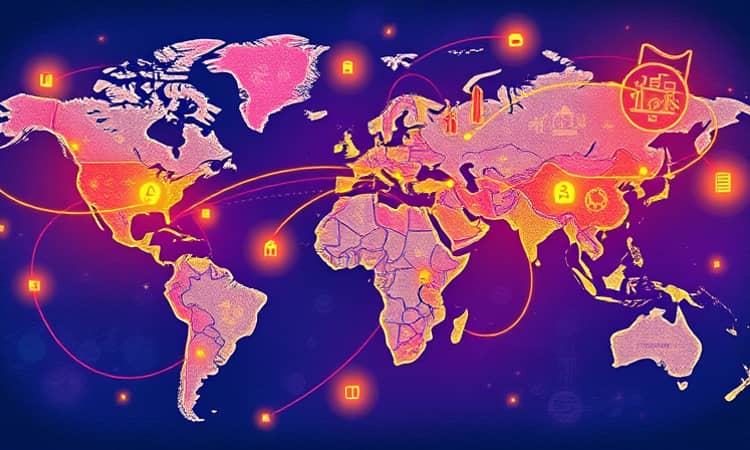
In the wake of the Russia–Ukraine escalation and rising global tensions, sanctions have emerged as a primary foreign-policy and security tool rather than a rare diplomatic recourse. Businesses across industries face a persistent backdrop of regulatory volatility and complexity, demanding a proactive approach to compliance and risk management.
This article explores four key pillars to help organizations understand why sanctions matter now, how regimes are evolving, the impact beyond financial services, and strategies for building resilient compliance programmes.
Why Sanctions Matter Now
Since the Russia–Ukraine war escalated in 2022, governments worldwide have implemented sanctions with unprecedented scope and speed. While growth moderated in early 2025, sanctions volumes remain elevated and dynamic. Businesses face not only new listings but frequent updates to existing restrictions, making static controls obsolete.
Regulators now employ sanctions for traditional national-security aims and for broader objectives such as human-rights protection, environmental preservation, and corporate transparency. This expansion reflects a shift from exceptional measures to a permanent statecraft instrument.
- Countering Russia–Ukraine war financing and evasion via third countries
- Addressing US–China tensions over dual-use and disruptive technologies
- Responding to Middle East instability, terrorism financing and illicit trade
- Targeting forced labour and supply-chain human-rights abuses
How Sanctions Regimes Are Evolving
The sanctions landscape is characterized by plural, overlapping authorities imposing divergent obligations. Companies must navigate complex regimes from:
- United States: OFAC, BIS, State Department, FinCEN, DOJ and DHS/CBP
- European Union: Council regulations, implementing acts and coordinated enforcement
- United Kingdom: OFSI, ECJU, Department for Business and Trade, and OTSI
- United Nations: Security Council sanctions committees
Enforcement has intensified globally. In the United States:
FinCEN issued a record US$1.3 billion penalty to a major bank under the BSA/AML framework. OFAC’s largest fine in 2024 reached US$20 million for Iran-related violations by a Thailand-based firm. DOJ’s 23 FCPA-related actions included a US$360 million settlement for combined FCPA and ITAR breaches. OFAC has also extended its statute of limitations from five to ten years, doubling the period for look-back investigations.
In Europe, sanctions enforcement more than doubled in 2024. Significant fines include a £29 million FCA penalty on a UK bank, €8.24 million by Lithuania’s FCIS on a crypto firm, €2.78 million by Polish Customs, and €2.5 million by German Customs for unauthorized exports. These actions exemplify a strict-liability-like regime where intent is secondary to outcome.
Regulators and the G7 are also dismantling sanctions-evasion networks that use shell companies, re-exports through neutral jurisdictions, and obfuscated ownership chains. Organizations must monitor ultimate beneficial owners, routes of transit and intermediary entities to detect and prevent circumvention.
Implications for Organizations Beyond Banks
Sanctions compliance has expanded far beyond financial services. Non-financial sectors—from manufacturing and logistics to technology, energy and professional services—face increasing exposure due to global supply-chain interdependence.
The convergence of sanctions, forced-labour bans and ESG mandates means that supply-chain transparency is now critical. Companies importing electronics or textiles must ensure that their suppliers have no ties to sanctioned entities or forced-labour practices, under risk of import bans, seizures and reputational damage.
Even an indirect connection—through a distributor, contractor or reseller—can trigger enforcement, operational disruption and public scrutiny. Regulators increasingly treat these indirect links as violations, especially when due diligence processes are weak or siloed.
Building Resilient Compliance Programmes
Given the pace of change, compliance programmes must be adaptive, integrated and forward-looking. Effective frameworks combine sanctions, export controls, ESG and human-rights diligence into a unified approach.
- Comprehensive risk assessment across jurisdictions, counterparties and supply chains
- Enhanced due diligence on customers, suppliers and intermediaries with focus on UBOs
- Technology and automation for real-time screening and anomaly detection
- Regular training, clear policies and leadership engagement to foster a compliance culture
- Continuous monitoring, audits and scenario testing for control effectiveness
Advanced data analytics and AI-driven monitoring enable companies to update sanction lists in real time and detect emerging risks with greater speed and accuracy. Automated alerts and workflow integrations reduce manual burdens and support rapid response.
Aligning sanctions compliance with the EU Corporate Sustainability Due Diligence Directive fosters supply-chain transparency and accountability. Organizations conduct human-rights impact assessments, trace product origins and publish key findings to meet regulatory and stakeholder expectations.
By instilling resilience through scenario-based testing, cross-functional collaboration and robust governance, companies can adjust swiftly to new designations, fines and regulatory changes. This flexibility transforms compliance from a defensive stance into a strategic asset.
Ultimately, sanctions are a permanent fixture of international relations. Businesses that embrace proactive compliance—combining comprehensive risk mapping, advanced technology and a strong compliance culture—will not only mitigate risk but also gain a competitive edge in an increasingly regulated global marketplace.
In this complex geopolitical landscape, understanding why sanctions matter, tracking evolving regimes, recognizing cross-industry implications and building resilient programmes are the cornerstones of sustainable success and responsible growth.