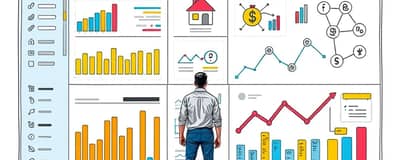
In an era of mounting bills and shifting consumer sentiment, understanding where your dollars go has never been more critical. While headlines focus on broad economic trends, each household faces its own crossroads: to spend, to save, or to adapt.
This article unveils the unvarnished realities behind U.S. spending patterns and equips you with actionable strategies for reclaiming control of your finances.
The Macro Reality: Numbers You Can’t Ignore
Recent data shows U.S. personal spending at approximately $21.1 trillion annualized in August 2025, rising 0.6% month-over-month after July’s 0.5%. By September, personal consumption expenditures (PCE) added $65.1 billion, or 0.3%. Despite solid growth, projections signal a slowdown from 5.7% in 2024 to 3.7% in 2025 and 2.9% by 2026.
Most of this increase—$63.0 billion—came from services, led by housing & utilities (+$15.4 billion), health care (+$12.6 billion), financial services & insurance (+$12.5 billion), food services & accommodations (+$8.2 billion), and transportation services (+$6.7 billion). Goods barely budged, contributing just $2.1 billion, with an offsetting $17.2 billion rise in gasoline and energy spending.
Household income rose by $94.5 billion (0.4%) in September, with disposable income up $75.9 billion (0.3%). Real spending growth outpaced income, up 0.4% month-over-month in August—driven by travel, dining, and durable goods. Yet forecasters warn of cooling labor markets, tariff-fueled inflation, and policy uncertainty, heralding a more conservative trajectory ahead.
Essentials vs. Discretionary: Your Spending Line in the Sand
As prices normalize at higher levels, consumers carve out a budget floor for non-negotiables like groceries, utilities, and fuel. McKinsey research shows intentions for essentials remain unchanged, while discretionary outlays on electronics, apparel, and dining out waver.
Protecting essential needs from cuts, households preserve spending on groceries and healthcare. Nearly 40% say they won’t reduce essentials, while over half plan to delay discretionary purchases such as jewelry, electronics, and nonessential dining.
- Groceries and household supplies
- Housing, utilities, and rent payments
- Health care appointments and prescriptions
- Gasoline and public transportation fares
In contrast, discretionary categories have seen multi-billion declines per month, from vehicles and recreational goods to clothing. Nearly half of consumers intend to keep holiday budgets flat—even as gift cards and groceries dominate seasonal spending.
Inequality in Spending: Who’s Feeling the Pinch?
Aggregate spending masks a widening divide. Upper-income households fuel growth, buoyed by equity gains and strong income. Meanwhile, lower-income consumers are drawing down savings and leaning on credit to bridge the gap, now holding higher inflation-adjusted debt than before the pandemic.
Inequality fueling divergent consumer realities, high earners plan the same or higher holiday budgets at a rate of 65%, compared to just 48% among low-income groups. Middle-income households occupy a middle ground but face growing pressure as prices outpace income gains.
This split underscores the importance of tailored strategies, ensuring those with constrained resources can still find pathways to financial resilience.
Practical Strategies: Stripping Down Your Spending
Confronting raw financial truths demands both awareness and action. By adopting targeted measures, you can regain control and prepare for economic headwinds.
- Audit every dollar: categorize expenses as essential or nonessential
- Implement a 7-day rule before making nonessential purchases
- Compare service providers annually for better utility and insurance rates
- Use automatic transfers to savings to prevent impulse spending
- Leverage seasonal dips—shop major purchases during off-peak months
Beyond cutting costs, reallocating resources toward high-impact goals—emergency funds, debt repayment, and retirement contributions—can transform your financial trajectory. Small shifts, like meal planning or subscription audits, accumulate remarkable savings over time.
Mindset and Resilience: The Emotional Side of Spending
Numbers alone won’t sustain change. Cultivating emotional resilience and a growth mindset ensures lasting habits. Acknowledge the stress and uncertainty many feel—consumer optimism has declined sharply in 2025, with rising concerns over inflation, job security, and living costs.
Shifting spending patterns in real time means accepting high prices as the new normal, then intentionally reallocating resources. Track your mood around money, celebrate milestones, and share progress with a supportive community to stay motivated.
Generational attitudes vary: Gen Z reports greater strain and dipping into savings, while millennials and boomers take a more measured approach to splurging. Tailor your strategies to personal circumstances and psychological triggers.
Looking Ahead: Building a Stronger Financial Future
As the economy cools, proactive households can thrive by embracing transparency and discipline. Real spending growth may slow, but that opens opportunities to recalibrate budgets, shore up savings, and invest in long-term goals.
Anticipated mortgage rate drops in early 2026 could ease housing burdens. Use this window to evaluate refinancing or homebuying options. Keep an eye on labor trends and policy shifts, adjusting plans as conditions evolve.
Building lasting financial resilience and confidence is not a one-time effort but a continuous journey. By stripping down to the raw truths of your spending habits, you gain clarity, control, and the power to shape your financial destiny.
Your path to stability starts with awareness. Embrace the numbers, challenge your assumptions, and take decisive action today.