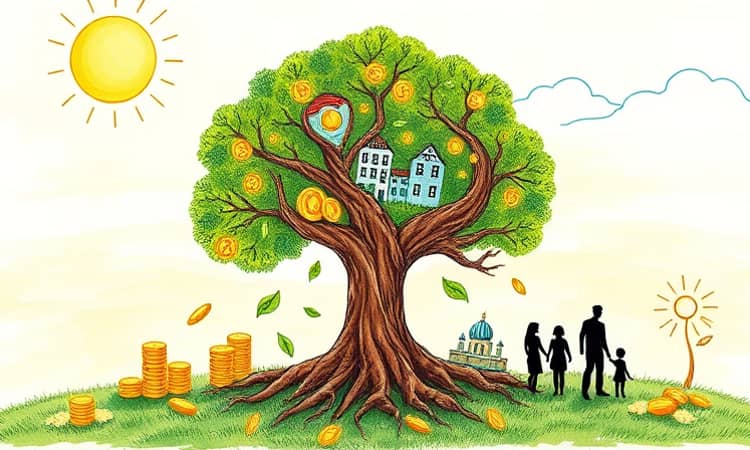
Building a truly long-lasting financial foundation requires more than chasing high returns. It demands a disciplined approach that weathers economic storms, supports multiple life goals, and preserves value across generations. This guide unveils the principles and practices for an unyielding portfolio that stands the test of time.
From defining durable wealth to assembling diversified holdings and safeguarding legacies, each element must work in harmony. Read on to discover actionable steps and real-world examples that will help you craft a resilient strategy, fueling confidence and clarity on your journey to lasting prosperity.
Defining “Wealth That Lasts” and Generational Wealth
“Wealth that lasts” transcends mere performance metrics. It is a financial reservoir that:
- Survives inflation, recessions, bear markets, and life shocks
- Funds multiple life goals—retirement, education, health care, philanthropy
- Can be transferred to heirs with minimal erosion from taxes, fees, and poor decisions
Generational wealth encompasses more than cash and securities. It may include:
- Financial wealth: savings, investments, and cash reserves
- Hard assets: real estate, collectibles, precious metals
- Business ownership: stakes in private companies and family ventures
- Intellectual property: patents, copyrights, trademarks
- Charitable foundations and endowments that perpetuate a legacy
Unlike “get rich quick” schemes, an unyielding portfolio relies on slow, risk-aware compounding, tax efficiency, and estate planning to protect gains and ensure a seamless transfer of assets.
Core Building Blocks of Durable Wealth
Regulators and leading institutions emphasize a set of enduring pillars for sustainable growth and protection:
- Start early & compound: A 10% annual return can grow $100,000 to about $1.6 million in 28 years.
- Create a saving & investing plan using the 50/30/20 rule: 50% needs, 30% wants, 20% savings/investing.
- Invest regularly via dollar-cost averaging to reduce timing risk.
- Diversify across asset classes, sectors, and geographies to lower portfolio volatility.
- Use tax-advantaged accounts—401(k), IRA, and employer plans with matching contributions.
- Manage debt and maintain an emergency fund and cash buffers to address unexpected costs.
Each pillar forms a layer of defense and growth, ensuring that your portfolio remains robust through every market cycle.
Behavior and Habits: Making the Portfolio “Unyielding”
Human behavior can make or break even the best-laid plans. Cultivating disciplined habits and systems transforms intentions into reliable outcomes:
- Perform a financial health check: tally income, expenses, debts, and assets before goal setting.
- Set SMART goals (Specific, Measurable, Achievable, Relevant, Time-bound) for savings and debt reduction.
- Automate contributions—direct paycheck deductions to investment and retirement accounts.
- Adopt a realistic spending plan aligned with values rather than a rigid budget.
- Avoid lifestyle inflation by channeling raises and bonuses into savings or debt paydown.
- Track expenses, review subscriptions, and diversify income through side ventures or rentals.
By embedding these routines into daily life, you guard against emotional reactions during market swings and ensure consistent progress.
Portfolio Construction: What Belongs in an “Unyielding” Portfolio
An effective portfolio balances growth potential with stability and income. The core asset classes and their roles include:
Supplemental holdings—private business stakes, commodities, or collectibles—can enhance returns but should occupy a smaller, well-researched portion of the overall mix.
Match your allocation to your time horizon and risk tolerance: younger investors typically favor a higher equity weight, while those nearing retirement shift toward bonds and cash. Regular rebalancing restores your chosen mix as markets move.
Long-Term Planning: Beyond the Portfolio
Your investment portfolio is only one component of a broader wealth plan. A comprehensive strategy also addresses:
- Retirement funding through pensions, IRAs, and workplace plans
- Education savings vehicles like 529 plans or Education Savings Accounts
- Risk management via insurance—life, health, disability, and liability coverage
- Tax planning to optimize withdrawals, capital gains rates, and gift strategies
- Estate and legacy goals implemented through wills, trusts, and beneficiary designations
As one advisor notes, “investments are only one component of a broader wealth plan,” serving as guardrails and a roadmap for multi-decade journeys.
Tax Efficiency and Estate Planning
Preserving wealth across generations hinges on smart tax and legal structures. Embrace tax-advantaged vehicles like 401(k)s and Roth IRAs, capture full employer matches, and adopt a buy-and-hold philosophy to benefit from lower long-term capital gains rates. Balance pre-tax, Roth, and taxable accounts for maximum flexibility and future tax diversification.
For legacy protection, establish an estate plan with wills, trusts, powers of attorney, and healthcare directives. Proactive planning can reduce estate and gift taxes, ensure your assets follow your wishes, and shield beneficiaries from creditors or mismanagement.
Debt, Risk, and Protection
Defensive strategies are as vital as growth initiatives. Prioritize paying off high-interest debt—credit cards and personal loans—before allocating funds to investments. Maintain an emergency fund covering 3–12 months of expenses, and consider 1–5 years of reserves for affluent families facing planned spending or opportunistic investments.
Insurance plays a key role in risk control. Adequate coverage for health, life, property, and liability helps prevent catastrophic losses from derailing your financial trajectory.
Building an unyielding portfolio demands patience, discipline, and a holistic approach. By combining strategic asset allocation, steadfast habits, tax-savvy structures, and comprehensive planning, you create a financial legacy that endures market cycles, economic upheavals, and life’s uncertainties. Start today—your future self and generations to come will thank you.