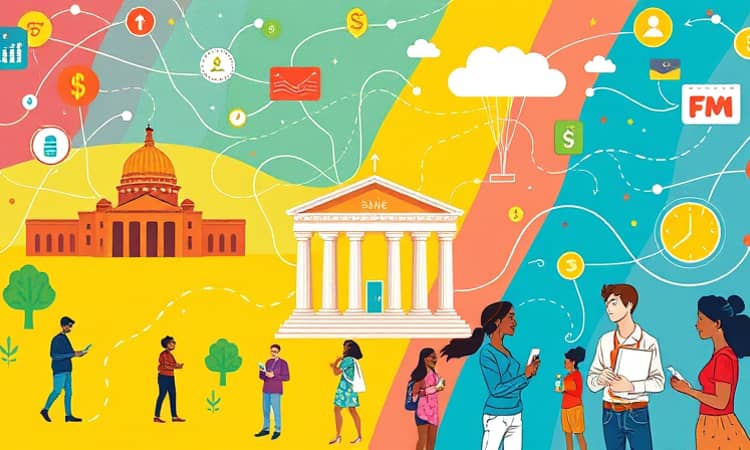
In an era of rapid digital transformation, data has become the lifeblood of financial systems worldwide.
This article explores how publicly accessible, machine-readable data is revolutionizing the finance industry by fostering innovation, transparency, and inclusion across every level of the economy.
Defining Open Data in Finance
At its core, open data in finance comprises datasets released under permissive licenses, enabling unrestricted use, reuse, and redistribution. This concept rests on the principle that information held by public and private entities should serve the greater good when responsibly shared.
The OECD emphasizes a shift from viewing data merely as a public right to recognizing it as a strategic asset for innovation, transparency and economic growth. By adopting robust privacy and security measures, open data initiatives can protect individual confidentiality while unlocking powerful insights.
- Open government data: budget allocations, procurement records, statistics from central banks and regulatory filings.
- Open banking / open finance: secure, customer-authorized access to deposit, transaction, and credit information through standardized APIs.
- Extended open data: smart data portability encompassing energy usage, telecom records, insurance policies, and pension holdings.
When organizations treat data as a foundational resource rather than a byproduct, they lay the groundwork for new business models, better risk management, and more inclusive financial services.
Macro Trends Fueling Innovation
Global investment in research and development continues to soar, with corporate R&D spending reaching approximately USD 1.3 trillion in 2024—an all-time high despite persistent inflationary pressures. Companies are directing this capital toward fintech, AI research, and advanced analytics platforms.
Venture capital valuations tell a complementary story: deal values surged by 50% in Q4 2024 and Q1 2025 compared to the previous year, signaling a renewed appetite for late-stage innovation bets. This growth, however, is accompanied by fewer total deals, hinting at a more selective and mature investment landscape.
Public agencies are also innovating. The U.S. Bureau of Economic Analysis introduced noise infusion techniques to release more granular industry data without compromising firm-level confidentiality. Its experimental national nowcast delivers near–real-time macroeconomic indicators, a boon for analysts and policymakers alike.
Such advancements underscore the critical role of data rights and modern privacy safeguards in balancing transparency with protection, enabling richer insights into economic activity and risk distribution.
Open Government Data as a Catalyst
Open government data provides the scaffolding upon which next-generation financial tools are built. By proactively releasing detailed information on public spending, contract awards, and climate impact metrics, governments enable innovators to design products that address pressing global challenges.
The 2023 OURdata Index highlights a global policy shift toward proactive data governance frameworks that align with digital transformation strategies. This means not only publishing data dumps but also curating high-quality, interoperable datasets optimized for AI-driven analytics.
- ESG and sustainable finance platforms use procurement and emissions data to validate green credentials and structure impact-linked bonds.
- Insurtech startups develop hyperlocal risk models by combining floodplain maps with regional economic and demographic statistics.
- Credit infrastructure initiatives leverage disaggregated small business performance data to extend financing to previously underserved SMEs.
By recognizing open data as core public infrastructure, governments can stimulate entrepreneurship, improve accountability, and enhance the social utility of financial markets.
Open Banking and Smart Data Evolution
Open banking has evolved rapidly since its inception, and new regulations are extending its scope into a broader concept known as smart data. In the UK and other innovative jurisdictions, authorities are exploring ways to port data across sectors like utilities, telecoms, and pensions.
This extension transforms consumer and business interactions by embedding financial services directly into everyday digital experiences. Ride-hailing apps offer in-app wallets, e-commerce platforms extend financing at checkout, and SaaS providers integrate payroll and expense management seamlessly.
- Consumer control and consent: dashboards enable users to grant, review, and revoke data-sharing permissions in real time.
- Predictive underwriting models analyze multi-source transaction histories to assess creditworthiness with higher precision.
- Personal financial management apps deliver real-time budgeting insights, automated savings plans, and behavioral nudges.
This ecosystem of interconnected services exemplifies how embedded finance fosters greater accessibility and tailors experiences to individual needs, reducing friction and unlocking new revenue streams for platform providers.
AI and Real-Time Analytics
The intersection of open data and artificial intelligence is catalyzing a paradigm shift in financial analytics. AI-driven platforms automate complex scenario analyses, generate forward-looking risk signals, and surface personalized investment recommendations.
Leading financial institutions now demand intraday risk reporting powered by streaming market data, economic indicators, and transaction feeds. This granularity empowers traders and risk managers to react swiftly to emerging market movements.
Cloud-native analytics solutions allow firms to integrate open data seamlessly, customize stress-testing scenarios, and deploy models at scale. The result is faster deployment cycles, reduced operational costs, and enhanced model governance.
Global calls for “AI that puts people first” emphasize the necessity of inclusive design and governance frameworks that mitigate algorithmic bias, surveillance risks, and exclusionary outcomes in finance.
Advancing Financial Inclusion
Despite remarkable progress, nearly 1.7 billion adults remain unbanked, often due to geographic, socioeconomic, or gender disparities. Mobile phone ownership and internet access are strong predictors of financial inclusion, highlighting the importance of digital connectivity.
Open data initiatives like the World Bank’s Digital Connectivity Tracker and Findex database enable policymakers to identify underserved regions and design targeted interventions. By combining telecommunications statistics with financial usage patterns, governments can prioritize infrastructure investments and literacy programs.
Innovators are leveraging open data to tailor products for marginalized communities. For example, microcredit platforms integrate weather and crop yield data to underwrite loans for smallholder farmers. Automated savings apps use behavioral analytics to nudge low-income users toward emergency fund building. Community-based insurance schemes adjust premiums dynamically based on localized climate risk assessments.
Financial democratization through data-driven innovation is not just an aspiration—it is a tangible reality shaping the future of markets, enterprises, and societies worldwide.
Conclusion
The convergence of open government data, open banking, AI, and mobile connectivity is setting the stage for an unprecedented wave of financial innovation.
Realizing this potential requires a collaborative approach involving policymakers, industry leaders, technologists, and civil society. By embracing collaborative governance and ethical standards that protect privacy while promoting discovery, we can harness data as a force for good.
Together, we can build a financial ecosystem that is transparent, resilient, and equitable—empowering individuals, fueling entrepreneurship, and driving sustainable growth for generations to come.